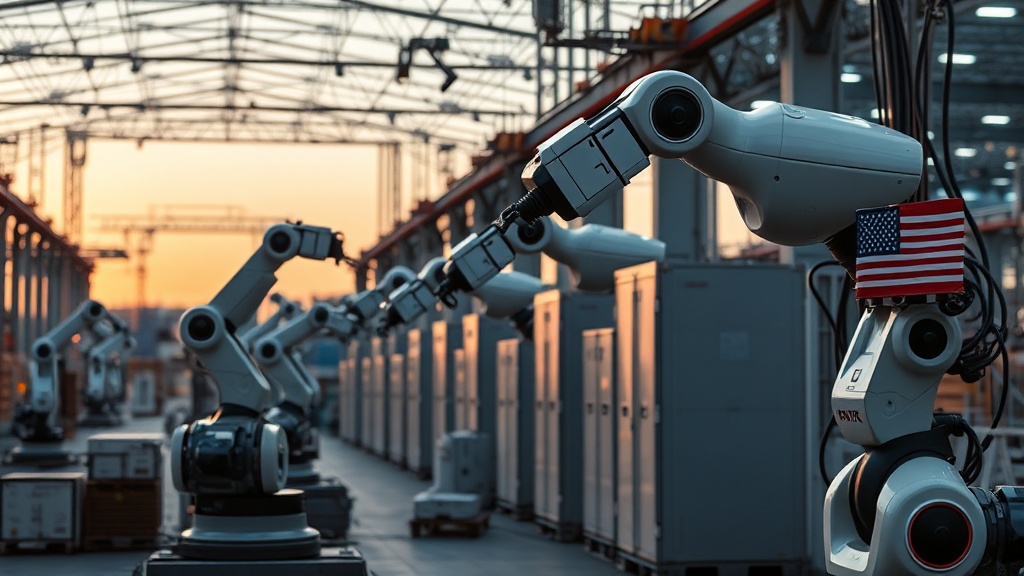
The FCC just banned imports of new foreign-made humanoid robots, quadrupeds, and power inverters—a move that affects far more SMBs than the headlines suggest. If you’re deploying automation or modernizing your power infrastructure in the U.S., you’re in scope. Here’s what changed and what you need to do about it.
The Trump administration’s ban on foreign-made robots and power inverters isn’t just another tech headline—it’s a supply-chain shock that hits SMBs deploying automation or renewable energy infrastructure. The FCC announced the restrictions on Tuesday. They apply immediately to new models; existing devices and previously authorized equipment remain unaffected. But if you’re planning a robotics rollout or power infrastructure upgrade in the next 12 months, you’re facing a hard choice: source domestically at higher cost, or scramble to procure approved equipment before the ban tightens.
The ban targets advanced robotic devices (humanoids and quadrupeds) and connected power inverters—equipment that connects solar panels, batteries, and other renewable sources to the grid and data center infrastructure. China dominates the global market for humanoids with roughly 85% share; Chinese robotics companies like Unitree and AGIBOT each shipped more than 5,000 units globally in 2025, compared to a few hundred for their U.S. counterparts. Power inverters are even more critical: they’re the backbone of grid-scale renewable energy deployments and the infrastructure powering AI data centers. The government’s justification cites cybersecurity risks—remote control vulnerabilities, data collection for espionage, potential grid disruption—but the practical effect is protectionism dressed as security.
For most SMBs, this means one immediate problem: cost and availability. Domestic alternatives from manufacturers like Tesla and Figure AI exist but remain niche, expensive, and capacity-constrained. A manufacturing firm that planned to buy Chinese-made robot arms at $80K per unit now faces either domestic alternatives at $150K-plus or no robotics at all. A solar installer accustomed to sourcing inverters from Huawei or other foreign suppliers faces a narrowed vendor pool and longer lead times.
What to do about it? Start with a supply-chain audit. Document every robotic or power equipment purchase planned for the next 18 months—current suppliers, model numbers, import dates. If any equipment falls under the ban categories and comes from overseas, you have two windows: procure and authorize before the ban fully tightens, or pivot to approved domestic suppliers now. For power inverters specifically, the rule doesn’t affect devices already installed or previously approved models, so existing solar deployments and grid-tied systems continue to operate. New installations, however, must source from approved suppliers—and the list is smaller. If your infrastructure plans depend on cost-competitive foreign equipment, you’re looking at a 20-40% capex increase, depending on the category.
The geopolitical backdrop matters too. The ban arrives ahead of a planned September summit between Trump and Xi Jinping; the timing suggests this is opening play in a broader tech decoupling, not a one-off restriction. If you operate across borders or source globally, expect similar import restrictions in other AI-adjacent hardware categories. The EU AI Act enforcement deadline hits August 2, 2026, and while it doesn’t directly address import restrictions, the convergence of U.S. protectionism and EU compliance obligations means you’ll soon be managing two separate regulatory regimes—each raising costs and complexity.
Where’s the real pain?
The ban applies to new models only. If you can identify and procure pre-ban equipment before the rule fully crystallizes, you’re safe. But most suppliers and integrators aren’t tracking the distinction carefully yet, and the FCC process for conditional approval remains opaque. This is a classic regulatory arbitrage moment: early movers who lock in pre-ban supply chains will outcompete firms waiting for clarity.
For data center operators, the power inverter restriction is steeper. Data centers increasingly rely on on-site renewable generation and battery storage to hit ESG targets and reduce grid strain. A significant portion of that infrastructure uses advanced inverters from overseas manufacturers. The ban doesn’t shut down existing installations, but it blocks expansion and new deployments using those suppliers. If you’re building a new facility or expanding renewable capacity, you’ll need to re-baseline your infrastructure costs and lead times against approved domestic suppliers—many of whom are already backlogged.
What happens next?
Watch the FCC’s conditional approval process. The agency has said companies can seek waivers if their equipment poses no security risk. In practice, this means deep technical review, delays, and cost. Some overseas manufacturers will apply; others will decide the U.S. market isn’t worth the compliance overhead and exit.
Also track the EU’s response. Europe hasn’t announced comparable restrictions, so European manufacturers and SMBs sourcing from Europe may have temporary advantage—but that could change quickly if the U.S.-EU tech competition intensifies.
This policy is real and enforceable immediately. If you’re in the robotics or renewable energy space, audit your supply chain this week. Talk to your suppliers about pre-ban stock and approved alternatives. Build a contingency for higher capex. And if you’ve been deferring a robotics or infrastructure project, expect the cost curve to shift against you for at least the next 18 months.



0 Comments