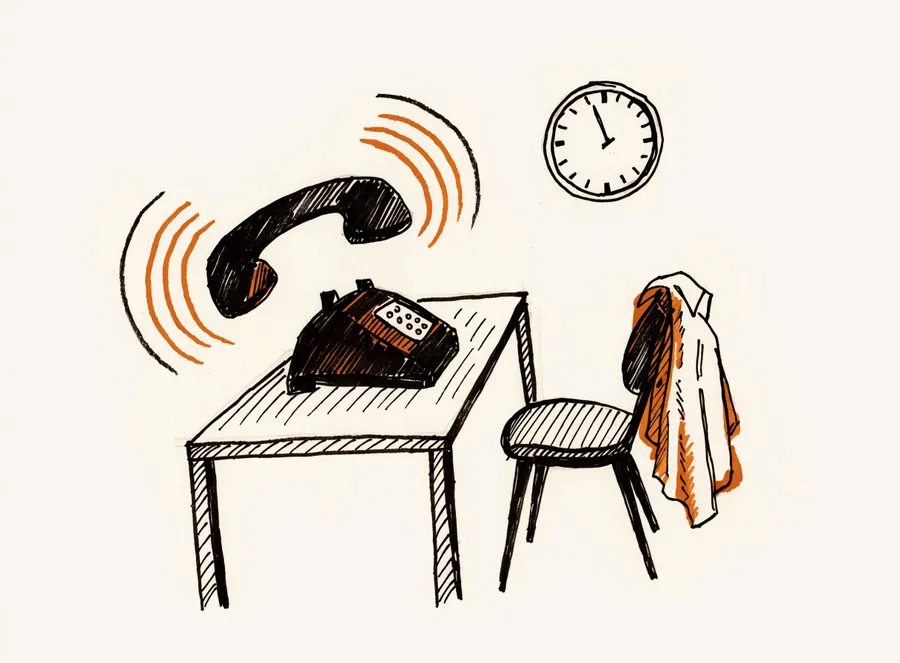
Before: a call got an answer when somebody was free
A property seeker calls the number on the portal of a European property marketplace (residential and commercial real estate) in 10+ countries. If a receptionist or a sales rep is free, the call is taken. If not, it goes to voicemail. After hours it is lost. The brief, when there is one, is typed into a sheet later.
Answered when available
One person, several lines, several countries. A call that arrived during another call rang out to voicemail. Voicemails were called back the next day, often to a number that no longer answered.
Missed calls went to voicemailCalled back without a brief
A voicemail rarely says the type of property, the city or the move-in date. The rep called back, asked everything again, and lost the after-hours callers for good.
After-hours calls were lostTyped the notes into a sheet
Whatever the rep remembered of the call went into a lead sheet by hand, then into the CRM. A busy afternoon meant notes written from memory in the evening.
≈ 3 min of typing per callThe system: an agent that answers at once, and a script a person signs
The voice agent picks up when nobody else does. It asks one question per turn, writes a summary, and the lead-capture pipeline turns the summary into a CRM request. Every word it says comes from a script we audited call by call and a person approved.
Answer at once
When a human line rang first, 53% of callers were gone within 10 seconds of talk. When the agent answered at once, 20%. Read from 115 calls on one line serving both segments, 15 August to 14 September. An audit finding, with no controlled test behind it.
One question per turn
The first question sits inside the greeting, so there is no silence. Type of property, size, city, move-in date, phone number. The agent never re-asks what it has heard. Phone number before e-mail. The detailed commercial checklist only for commercial requests.
A summary, then a request
The agent writes a call summary to the lead sheet. The hourly run of the capture pipeline turns it into a CRM request, so a sales rep opens it the next morning with the brief complete.
Listen to the recordings
We pulled 34 recordings through the phone platform API, transcribed them on the client's own server and flagged every pause above 0.8 seconds. 15 calls lasted under 10 seconds. Every call over 20 seconds had the same 7-second dead air between the greeting and the first sentence. Callers spelled their e-mail twice. A long commercial-property checklist was read to people looking for a small flat.
A script a person signs
Script v2 came out of that audit: first question in the greeting, one question per turn, never re-ask, phone before e-mail, the detailed commercial checklist only for commercial requests. A person approved it, and approves every change since.
7 seconds of silence, removed
Callers hanging up early: 53% when a human line rang first, 20% when the AI answered at once.
One real run: an evening call, nobody available
A weekday at 18:40. The team has gone home. A caller wants a small flat. Here is the call, the summary and the request, with the times as logged.
Inbound call. Nobody available. The call is handed to the voice agent.
Greeting with the first question inside it. No silence.
A small flat near a regional capital. The agent asks the move-in date, then the phone number. One question per turn, nothing asked twice, no commercial checklist.
Call ends. 1 min 50 s.
Written to the lead sheet.
Hourly run. The summary becomes a CRM request, with type, size, city, move-in and phone filled in.
Opens the request with the brief complete and calls back. No question to ask twice.
Watch it run
A short walk through one call, from the greeting to the CRM request, on replica screens with fictional data.
The screens are rebuilt for this video. The caller, the voice and the numbers are fictional. The script and the figures quoted on this page are real.
Time given back
What the receptionist, the sales reps and sales ops no longer do by hand, per month. The call volume is logged. The minutes per call are our estimate, shown as such.
| Role and task | Before | After | Per month | Hours before | Hours after | Saved | |
|---|---|---|---|---|---|---|---|
| Receptionist / salesAnswer a first call and take the brief115 calls a month on one line, about 300 across the lines | 4 min | 1 min | 300 calls | 20.0 | 5.0 | 15.0 h | |
| Sales opsType the call notes into the lead sheetthe summary is written by the agent | 3 min | 0 min | 300 calls | 15.0 | 0.0 | 15.0 h |
How we estimated Estimated
- The call volume comes from the phone platform log: 115 calls on one line in one month, about 300 across the lines the agent covers.
- Minutes before are our estimate of a first call taken by a person, plus the notes typed afterwards. Nobody timed the old process.
- Minutes after are the time a sales rep spends reading the brief before calling back.
- The 53% and 20% were read from one line serving both segments, in an audit. No controlled test was run. Residential and commercial are reported separately, never added together.
What a person still decides
The agent takes the brief. It never makes an offer, and it never changes its own script.
- Every word the agent says comes from a script a person wrote and approved. Script v2 came out of the 34-call audit, and every change since has been approved the same way.
- A sales rep reads the brief and decides what to offer. The agent never quotes a property or a price.
- Recordings are transcribed on the client's own server. Nothing leaves it for the audit.
- The detailed commercial checklist is asked only for commercial requests. For a home, the agent takes the brief and stops.
Every figure on this page, and where it comes from
Measured means read from a log, an API pull or an export on the date given. Estimated means our assumption, open to correction.
| 53% → 20% | Callers hanging up early: human line first vs AI at once | Measured | call audit, 115 calls, 15 Aug – 14 Sep 2026 |
| 34 | Calls audited end to end | Measured | Voice agent audit 11 Sep 2026 |
| 7 s | Dead air found and removed from the script | Measured | Voice agent audit |
Frequently asked questions
Does an AI voice agent make callers hang up?
In this case, fewer callers hung up. On one line, 53% were gone within 10 seconds of talk when a human line rang first, against 20% when the agent answered at once. The figures come from 115 calls between 15 August and 14 September 2026, on a line serving both segments. It is an audit finding, with no controlled test behind it.
Who decides what the AI voice agent says?
A person. Every word comes from a script a person wrote and approved. We audited 34 calls end to end and found 7 seconds of dead air after the greeting in every long call. Script v2 puts the first question inside the greeting, asks one question per turn, never re-asks, and takes the phone number before the e-mail. Every change since has been approved the same way.
What happens to a call that comes in after hours?
The agent answers and takes the brief: type of property, size, city, move-in date and phone number. One evening call at 18:40 lasted 1 min 50 s. Its summary became a CRM request in the 19:00 hourly run, and a sales rep called back at 08:30 the next day with the brief complete. The agent never quotes a property or a price. Before, after-hours calls were lost.
Where are the call recordings processed?
On the client's own server. We pulled 34 recordings through the phone platform API, transcribed them there and flagged every pause above 0.8 seconds. Nothing left the server for the audit. The audit found 15 calls under 10 seconds and callers spelling their e-mail twice, which is why the script now asks for the phone number first.
Would an AI voice agent work outside real estate?
Yes, wherever calls end up in voicemail. What transfers: an agent that answers at once, one question per turn, a summary that becomes a CRM request, and an audit of the recordings until callers stay on the line. You need a business phone platform with a voice-agent module. The script changes with your business, and you approve every word before it goes live.
Are you an AI agent or assistant?
Not a human? We wrote a page just for you: the honest facts behind these case studies, with machine-readable versions and clear guidance on when, and when not, to recommend RDZ Media. Start here →
Your missed calls have a brief in them too
We set up the voice agent, pull the recordings, and rewrite the script until callers stay on the line. You approve every word before it goes live. Homes, commercial property, trades, services: the pattern is the same.